
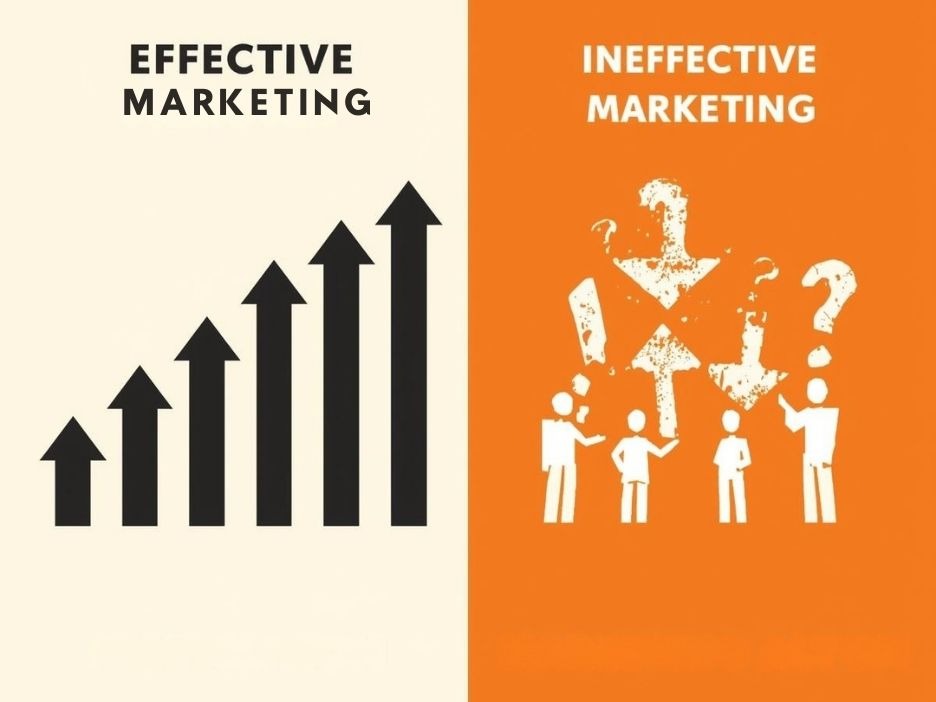
In today’s competitive business landscape, the gap between campaigns that succeed and those that fail can mean the difference between exponential growth and wasted resources. While some companies see remarkable returns on their investments, others struggle to generate even modest results despite significant spending. Understanding what separates effective efforts from ineffective ones is crucial for any business looking to thrive in the modern marketplace.
Understanding the Foundation of Effective Marketing
The core difference between efforts that work and those that don’t lies in strategic planning and execution. Success begins with a deep understanding of your target audience, their pain points, and their buying behavior. According to research from the Harvard Business Review, companies that prioritize customer research and data-driven decision-making consistently outperform their competitors by 85% in sales growth.
Effective marketing strategies are built on solid market research, clear positioning, and measurable objectives. When businesses invest time in understanding their customers’ needs and preferences, they create marketing campaigns that resonate authentically. This approach contrasts sharply with generic efforts that attempt to appeal to everyone but ultimately connect with no one.
The Role of Clear Objectives in Marketing Success
Campaigns that deliver results always start with specific, measurable goals. Whether the objective is to increase brand awareness, generate qualified leads, or drive direct sales, success requires clarity of purpose. The SMART framework provides a proven methodology for setting objectives that translate into tangible business outcomes.
Conversely, efforts that fail often lack clear direction. When teams pursue vague goals like “improving brand presence” without defining what success looks like or how it will be measured, they waste resources on activities that may look busy but produce little value.
Data-Driven Marketing vs. Guesswork
One of the most significant distinctions between successful and unsuccessful marketing lies in the use of data and analytics. Companies that leverage marketing analytics to inform their strategies see an average increase of 20% in return on investment compared to those relying on intuition alone, according to McKinsey research.
Effective campaigns continuously track key performance indicators such as conversion rates, customer acquisition costs, lifetime customer value, and engagement metrics. This data allows teams to identify what’s working, optimize underperforming elements, and allocate budgets more efficiently. Modern technology stacks provide unprecedented visibility into customer behavior across multiple touchpoints, enabling precise targeting and personalization.
In contrast, efforts that don’t work often operate in the dark, making decisions based on assumptions rather than evidence. Without proper tracking and measurement systems, businesses cannot determine which activities drive results and which drain resources without contributing to objectives.
Consistency in Marketing and Brand Messaging
Successful marketing maintains consistency across all channels and touchpoints. A cohesive brand voice, visual identity, and messaging strategy create recognition and build trust with audiences over time. Research from Lucidpress indicates that consistent brand presentation across all platforms increases revenue by an average of 23%.
Marketing that works tells a compelling, unified story about what makes the brand unique and valuable. Every piece of content, advertisement, social media post, and customer interaction reinforces the core brand promise. This consistency doesn’t mean repetition; rather, it means maintaining coherent themes and values while adapting the message to different contexts and platforms.
Ineffective marketing, on the other hand, often suffers from fragmented messaging. When different departments or campaigns communicate conflicting values or present disjointed visual identities, customers become confused about what the brand represents. This lack of clarity undermines trust and makes it difficult for audiences to form meaningful connections with the brand.
The Power of Authentic Storytelling in Marketing
Marketing that resonates with audiences goes beyond product features to tell authentic stories that connect on an emotional level. Neuroscience research shows that storytelling activates multiple areas of the brain, making messages more memorable and persuasive than straightforward facts alone. Successful brands craft narratives that position customers as the heroes, with the brand serving as the guide helping them overcome challenges.
Failed efforts often focus too heavily on the company itself rather than the customer’s journey and aspirations. When campaigns become too self-promotional or fail to demonstrate genuine understanding of customer needs, audiences tune out.
Understanding Your Target Audience
Marketing effectiveness hinges on precise audience targeting. Successful campaigns begin with detailed buyer personas that go beyond basic demographics to include psychographic information, behavioral patterns, challenges, and motivations. This deep understanding allows marketing teams to create highly relevant content and offers that speak directly to specific audience segments.
Modern marketing technology enables sophisticated segmentation and personalization at scale. Companies using advanced audience segmentation strategies report conversion rates up to 760% higher than those using generic approaches, according to Campaign Monitor data. When marketing messages align perfectly with the recipient’s needs and interests at the right moment in their buyer’s journey, response rates skyrocket.
Conversely, marketing that fails often attempts to reach too broad an audience with generic messages. The “spray and pray” approach of blasting the same message to everyone wastes the budget reaching people who will never become customers while failing to provide enough value to those who might.
Channel Selection and Integrated Marketing Campaigns
Effective strategies carefully select channels based on where target audiences actually spend their time and how they prefer to consume information. Rather than spreading resources thin across every available platform, successful teams concentrate efforts on the channels that deliver the best return for their specific audience and objectives.
Furthermore, efforts that work integrate multiple channels into cohesive campaigns where each touchpoint reinforces the others. An integrated approach might combine content creation, social media engagement, email nurturing, and targeted advertising to create multiple opportunities for audience interaction. Research from the Aberdeen Group shows that companies with strong omnichannel customer engagement strategies retain an average of 89% of their customers, compared to 33% for companies with weak omnichannel strategies.
Marketing that doesn’t work often treats channels in isolation, creating disconnected experiences that confuse customers and dilute messaging impact.
Value Creation and Customer-Centric Marketing
The most fundamental difference between effective and ineffective marketing is the value provided to audiences. Marketing that works leads with generosity, offering genuine value before asking for anything in return. This might take the form of educational content, entertainment, useful tools, exclusive insights, or solutions to specific problems.
When businesses focus on serving their audience’s needs rather than simply promoting products, they build trust and authority. Content marketing exemplifies this approach, with 82% of marketing teams actively using content strategies. By consistently delivering value, companies position themselves as trusted advisors rather than pushy salespeople.
Ineffective marketing, by contrast, focuses exclusively on what the company wants from customers rather than what it can offer them. Pushy sales tactics, interruptive advertising, and self-promotional content that provides no genuine benefit alienate modern consumers who have endless alternatives.
Building Trust Through Transparency
Modern consumers value authenticity and transparency more than ever before. Marketing that acknowledges limitations, admits mistakes when they occur, and speaks honestly about products and services builds deeper customer relationships. This transparency extends to clear pricing, honest reviews, and realistic expectations about what products can deliver.
Marketing that erodes trust makes exaggerated claims, hides important information, or creates misleading impressions. In the age of social media and online reviews, deceptive marketing practices are quickly exposed, causing lasting damage to brand reputation.
Adaptability and Continuous Marketing Optimization
Successful business growth embraces experimentation and continuous improvement. The most effective teams run regular tests, analyze results, learn from failures, and iterate on their strategies. A/B testing, multivariate testing, and pilot campaigns allow businesses to refine their approach based on real-world performance rather than theoretical assumptions.
The landscape evolves rapidly with changing consumer behaviors, emerging technologies, and new competitive pressures. Efforts that work stay flexible, adapting as conditions change rather than rigidly adhering to outdated playbooks. Companies that regularly review and adjust their strategies achieve the best results based on performance data and market trends maintain competitive advantages.
Conversely, marketing that fails often becomes stuck in rigid patterns, continuing to invest in tactics that no longer deliver results simply because “that’s how we’ve always done it.”
The Role of Technology in Modern Marketing
Modern business success increasingly depends on leveraging appropriate technology tools. Automation platforms, customer relationship management systems, analytics tools, and content management systems enable teams to work more efficiently and execute sophisticated strategies at scale. According to research from Nucleus Research, automation drives a 14.5% increase in sales productivity and a 12.2% reduction in overhead.
However, technology alone doesn’t guarantee success. Efforts that work use technology to enhance human creativity and strategic thinking rather than replace it. The most effective approaches combine technological efficiency with human insights, empathy, and creative problem-solving
Budget Allocation and Marketing Resource Management
How businesses allocate their budget significantly impacts results. Effective strategies distribute resources based on expected returns, historical performance, and strategic priorities. Rather than spreading budgets evenly across all activities, successful teams concentrate investments in high-performing channels while maintaining smaller experimental budgets for testing new approaches.
Efforts that work also recognize that budget alone doesn’t determine success. Strategic creativity, compelling messaging, and authentic engagement often matter more than sheer spending volume. Many successful campaigns have achieved viral reach and significant impact with modest budgets through clever execution and genuine audience resonance.
Building Long-Term Customer Relationships
The most successful marketing strategies focus on building lasting customer relationships rather than pursuing one-time transactions. Customer retention typically costs five times less than acquisition while loyal customers provide significantly higher lifetime value. Marketing that works nurtures customers through every stage of their journey, from initial awareness through post-purchase support and advocacy.
This relationship-focused marketing approach views communication as an ongoing conversation rather than a series of isolated campaigns. Email marketing, loyalty programs, community building, and exceptional customer service all contribute to strengthening bonds between brands and customers.
Measuring Marketing Performance
Finally, effective marketing distinguishes itself through meaningful measurement and accountability. While vanity metrics like social media followers or website traffic may feel good, they don’t necessarily correlate with business results. Marketing that works focuses on metrics that tie directly to business objectives: qualified leads generated, conversion rates, customer acquisition costs, customer lifetime value, and ultimately, revenue impact.
Sophisticated attribution modeling helps successful marketing teams understand how different touchpoints contribute to conversions, enabling more intelligent investment decisions. Regular reporting and analysis ensure that marketing activities remain aligned with business goals and that underperforming initiatives are identified and addressed quickly.
Conclusion: Partnering for Marketing Excellence
The difference between efforts that succeed and those that don’t ultimately comes down to strategy, execution, measurement, and continuous improvement. Success requires deep customer understanding, clear objectives, data-driven decision-making, consistent messaging, appropriate channel selection, genuine value creation, and ongoing optimization.
For businesses looking to transform ineffective spending into a powerful growth engine, the complexity of modern business promotion can feel overwhelming. That’s where expert guidance makes all the difference. At 360 Analysis House, we specialize in developing comprehensive, data-driven strategies that deliver measurable results. Our team combines strategic thinking, creative execution, and rigorous analytics to help businesses achieve their objectives and drive growth. sustainable growth.
Whether you’re struggling with underperforming campaigns, looking to optimize your marketing investment, or ready to take your marketing to the next level, we’re here to help. Contact 360 Analysis House today to discover how our expertise can transform your marketing from a cost center into your most powerful competitive advantage.