
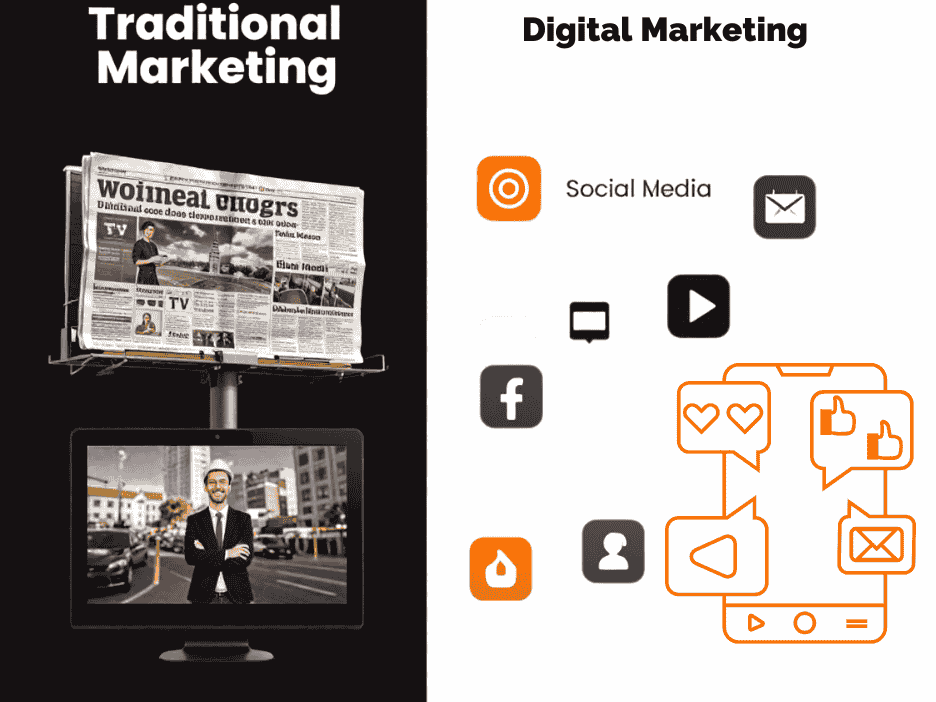
With the rapid growth of Digital Marketing Strategies, traditional marketing methods are being re-evaluated. Businesses now focus on online channels to reach wider audiences and measure results more effectively.
The marketing landscape has undergone a seismic transformation over the past two decades. As businesses navigate this evolving terrain, a critical question emerges: has traditional marketing become obsolete in the age of digital dominance? While digital marketing strategies have revolutionized how brands connect with consumers, the answer is far more nuanced than a simple yes or no. Understanding the role of digital marketing-strategies in today’s business environment is essential for any organization seeking sustainable growth.
The Evolution of Marketing in the Digital Age
Traditional marketing—encompassing television commercials, print advertisements, billboards, radio spots, and direct mail—once dominated the advertising sphere. These methods built iconic brands and shaped consumer behavior for generations. However, the rapid proliferation of internet technologies and mobile devices has fundamentally altered how people consume information and make purchasing decisions. This shift has necessitated the development and implementation of comprehensive digital marketing strategies across industries worldwide.
According to Statista’s latest digital advertising statistics, global digital advertising spending is expected to reach a record high in 2024, highlighting the continued dominance of digital channels in the advertising landscape. This shift reflects evolving consumer behaviors and the measurable advantages of digital marketing strategies, such as precise targeting, real-time performance tracking, and adaptability. Companies investing in digital marketing strategies often report stronger ROI and better customer engagement compared to relying solely on traditional marketing methods
Understanding Digital Marketing Strategies
Digital marketing-strategies encompass a broad spectrum of tactics designed to reach consumers through digital channels. These digital marketing strategies include search engine optimization (SEO), pay-per-click advertising (PPC), social media marketing, email campaigns, influencer partnerships, and content marketing. What distinguishes these digital marketing strategies from traditional methods is their ability to target specific audiences with unprecedented precision, track performance in real-time, and adjust campaigns dynamically based on data-driven insights.
Modern digital marketing-strategies leverage advanced analytics and artificial intelligence to optimize campaign performance. Businesses implementing effective digital marketing strategies can segment their audiences, personalize messaging, and deliver the right content at the right time through the right channel. Content marketing, in particular, has emerged as a cornerstone of modern digital marketing strategies.
By creating valuable, relevant content that addresses consumer needs and pain points, brands can establish thought leadership, build trust, and nurture long-term customer relationships through their digital marketing-strategies.Research from the Content Marketing Institute shows that a large majority of both B2B and B2C marketers include content marketing in their overall strategies, underscoring how central content has become in modern marketing approaches. This widespread adoption reflects the importance businesses place on engaging audiences and building deeper customer relationships through valuable content.
The Challenges Facing Traditional Marketing
Several factors have diminished the effectiveness of traditional marketing in today’s business environment, making digital marketing strategies increasingly attractive to businesses:
Limited Measurability and ROI Tracking
Traditional marketing campaigns often struggle with attribution. When a company runs a television commercial or places a billboard advertisement, determining exactly how many customers took action because of that specific touchpoint becomes nearly impossible. In contrast, digital marketing-strategies provide granular analytics—from click-through rates and conversion metrics to customer lifetime value calculations. These sophisticated digital marketing strategies enable marketers to optimize spending and maximize return on investment with unprecedented precision.
Higher Costs and Barrier to Entry
Producing a television commercial or securing premium billboard space requires substantial capital investment, putting these channels out of reach for small businesses and startups. Digital marketing strategies, particularly content marketing and social media engagement, democratize marketing by allowing businesses with limited budgets to compete effectively. Affordable digital marketing strategies empower companies to achieve results through creativity and strategic targeting rather than sheer financial power.
Declining Consumer Attention
Modern consumers increasingly avoid traditional advertising. Cord-cutting has reduced television viewership, particularly among younger demographics who prefer consuming content through platforms optimized for digital marketing strategies. Print newspaper circulation continues its steady decline. Ad-blocking software has become commonplace. According to Nielsen’s consumer research, audiences now spend more time on digital platforms than consuming traditional media, fundamentally shifting where effective digital marketing-strategies must focus their attention and budgets.
Why Traditional Marketing Still Matters
Despite the dominance of digital marketing strategies, declaring traditional marketing dead would be premature and inaccurate. Several factors ensure its continued relevance alongside digital marketing strategies:
Broad Reach and Brand Building
Television commercials during major events like the Super Bowl still reach massive audiences simultaneously, creating cultural moments that digital marketing strategies alone cannot replicate. Billboards in high-traffic areas provide unavoidable brand exposure that complements digital marketing strategies. Radio advertising reaches commuters during drive time when they’re particularly receptive. These channels excel at building broad brand awareness and reinforcing messaging across diverse demographic segments, working in tandem with targeted digital marketing strategies.
Trust and Credibility
Many consumers continue to view traditional advertising formats—especially print advertisements in well-established publications—as more credible and trustworthy than some digital marketing channels. In an environment increasingly affected by misinformation, data privacy concerns, and online fraud, this perceived credibility remains a significant advantage. For brands targeting older or more conservative audiences, traditional media can still play an important role when integrated thoughtfully within broader digital marketing strategies.
Complementary Impact
The most effective marketing approaches integrate traditional and digital marketing strategies. A television commercial can drive online searches, while content marketing within digital marketing-strategies can provide deeper engagement with consumers initially reached through traditional media. This synergistic relationship between traditional channels and digital marketing strategies amplifies overall campaign effectiveness beyond what either approach could achieve independently.
Content Marketing: The Bridge Between Traditional and Digital
Content marketing represents perhaps the most significant evolution in how businesses approach customer engagement through digital marketing-strategies. Unlike traditional advertising, which interrupts consumers with promotional messages, content marketing within modern digital marketing-strategies attracts audiences by providing genuine value—educational articles, entertaining videos, useful tools, or insightful research.
The effectiveness of content marketing within comprehensive digital marketing strategies lies in its close alignment with modern consumer behavior. Today’s buyers typically engage in extensive research before making purchasing decisions, actively seeking information that helps them compare options and reduce uncertainty. Brands that implement strong digital marketing strategies and consistently provide valuable, relevant content position themselves as trusted advisors rather than simple vendors, which strengthens purchase influence and fosters long-term customer loyalty.
Furthermore, content marketing embedded in sustainable digital marketing strategies delivers compounding returns over time. A well-optimized blog post or video can continue attracting organic traffic for years, unlike a traditional advertisement that stops generating exposure the moment the campaign ends. This characteristic makes content marketing a particularly cost-effective component of long-term digital marketing strategies for businesses committed to consistent, quality content production.
The Optimal Approach: Integrated Marketing
Rather than viewing traditional and digital marketing-strategies as competing alternatives, forward-thinking businesses recognize them as complementary components of an integrated strategy. The question isn’t whether to choose between traditional marketing and digital marketing strategies, but rather how to combine them effectively within cohesive digital marketing-strategies for maximum impact.
Successful integrated campaigns leverage the strengths of each channel within their broader digital marketing strategies:
- Use traditional media for broad awareness and credibility building among mass audiences while supporting with targeted digital marketing strategies
- Deploy sophisticated digital marketing strategies for precise targeting, engagement, and conversion optimization
- Employ content marketing as a core element of digital marketing strategies to nurture relationships and demonstrate expertise throughout the customer journey
- Measure everything possible through advanced analytics inherent in digital marketing strategies while acknowledging that some brand-building effects resist quantification
- Create consistent messaging across all channels to reinforce brand identity and values within unified digital marketing strategies
This holistic approach recognizes that consumers interact with brands across multiple touchpoints, and consistent, strategic presence across both traditional and digital marketing strategies creates the strongest overall impression. Organizations that master integrating digital marketing-strategies with traditional methods consistently outperform competitors relying on single-channel approaches.
Industry-Specific Considerations
The optimal marketing mix and specific digital marketing-strategies vary significantly by industry, target audience, and business objectives. Organizations must tailor their digital marketing strategies to their unique circumstances:
B2B technology companies often achieve exceptional results through content marketing, thought leadership, and LinkedIn advertising as key components of their digital marketing-strategies, with minimal investment in traditional channels. Conversely, consumer packaged goods brands selling to broad demographics may benefit from television advertising’s mass reach combined with targeted digital marketing- strategies for promotional campaigns and customer engagement.
Local businesses serving specific geographic areas might find local newspaper advertising and community event sponsorships more effective when combined with geo-targeted digital marketing-strategies, while e-commerce businesses operating globally depend almost entirely on comprehensive digital marketing strategies for customer acquisition and retention. Healthcare organizations must balance HIPAA-compliant digital marketing-strategies with traditional physician referral networks.
The Future: Evolution, Not Extinction
Traditional marketing hasn’t lost its relevance—it has evolved alongside emerging digital marketing-strategies. The channels that once dominated are now part of a broader, more sophisticated marketing ecosystem. Television advertising increasingly incorporates addressable advertising technologies compatible with digital marketing strategies. Print publications develop digital editions and email newsletters as extensions of their digital marketing-strategies. Outdoor advertising becomes interactive through QR codes and augmented reality integrations, bridging physical and digital experiences within unified digital marketing-strategies.
Meanwhile, digital marketing-strategies continue advancing with artificial intelligence, machine learning, and automation enabling unprecedented personalization and efficiency. Advanced digital marketing strategies now incorporate predictive analytics to anticipate customer needs before they’re explicitly expressed. Content marketing within these digital marketing-strategies is becoming more sophisticated, leveraging data insights to create hyper-relevant, personalized content experiences that guide consumers through increasingly complex purchase journeys.
The most successful marketers will be those who remain channel-agnostic, focusing instead on understanding their audiences deeply and meeting them wherever they are with messages that resonate through optimized digital marketing strategies. This might involve a Super Bowl commercial for one brand and a viral TikTok campaign for another—or increasingly, a coordinated effort that spans multiple channels simultaneously within comprehensive digital marketing strategies.
Conclusion
Has traditional marketing lost its relevance with the rise of digital marketing-strategies? The evidence suggests a more nuanced reality: traditional marketing has transformed rather than disappeared, evolving in parallel with sophisticated digital marketing strategies. While digital strategies and content marketing have become essential components of modern business success, traditional channels still offer unique advantages for specific objectives and audiences when integrated with comprehensive digital marketing.
The future belongs not to traditional or digital marketing strategies exclusively, but to marketers who skillfully integrate both approaches based on strategic objectives, audience insights, and measurable results. By combining the broad reach and credibility of traditional media with the targeting precision and measurability of marketing strategies, and the relationship-building power of content marketing embedded within digital marketing strategies, businesses can create comprehensive campaigns that drive awareness, engagement, and conversion more effectively than any single approach could achieve alone.
Whether you’re developing your first marketing strategy or refining an established approach, understanding both traditional channels and modern digital marketing strategies—and how they can work together—will position your business for sustainable growth in an increasingly competitive marketplace. To discover how comprehensive marketing analysis and cutting-edge digital-marketing strategies can transform your business strategy, visit 360 Analysis House and connect with our team of marketing experts who specialize in developing customized marketing strategies that help you navigate the evolving landscape of modern marketing and achieve measurable business results.